HVAC&R System and the Importance of ‘Dry All’ Filter-Driers
Introduction
As a top producer of a Full Range of HVAC&R Line Products, “Dry All” is always developing, inventing, and innovating new products to satisfy market demands. Since its beginning, “Dry All” has provided top-tier goods created by their engineers to meet the demands of HVAC&R systems.
We design, develop and produce the widest range of HVAC&R Line Products like Filter Driers, Accumulators, Receivers, Oil Separators etc.
This blog’s goal is to help you understand the significance of Filter Driers in HVAC&R systems.
Need of Refrigeration system.
The refrigeration system consists of a mechanical component that makes it easy to maintain the cold temperature. The main component of the refrigeration system consists of a compressor, condenser, throttling device, and evaporator. Apart from the major components of refrigeration systems, the refrigerant system needs important HVAC&R line components for longevity and well-functioning of the system and act as a safeguard to the system. It includes Liquid Line Filter-Drier, Suction Line Filter-Drier, Accumulator, Liquid Receiver, Oil Receiver, Oil separator, Sight glass, etc.
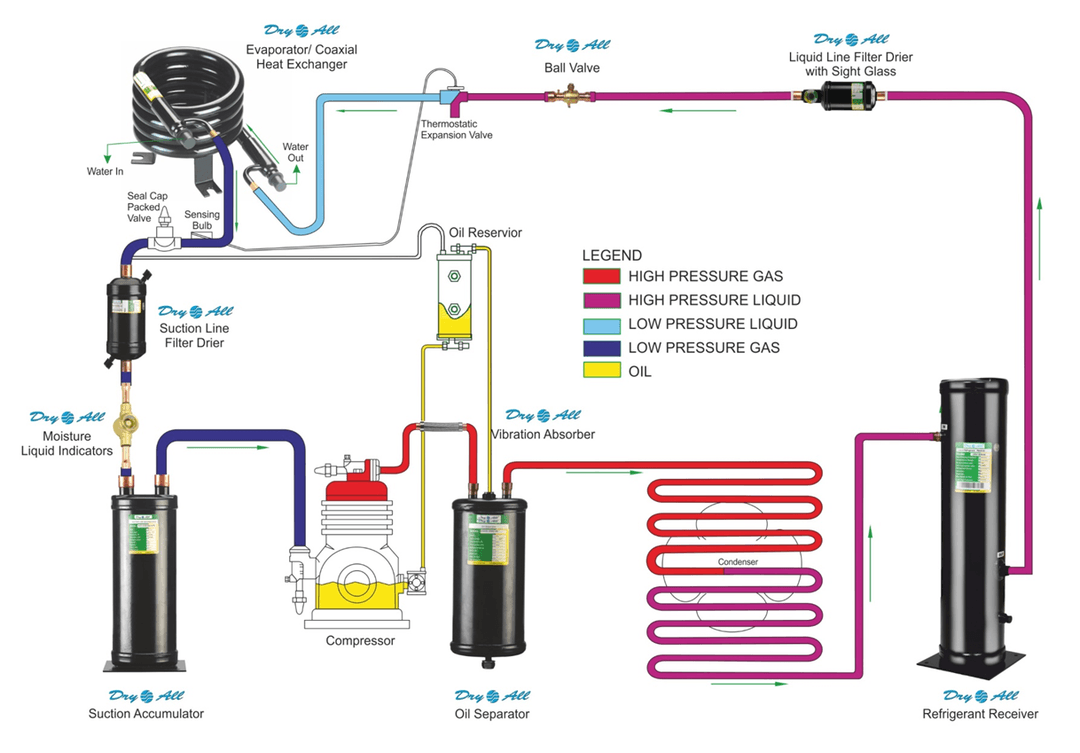
Figure 1. Basic Principle of Refrigeration System.
A short introduction to four major components of the HVAC&R System:
Compressor
The main function of the compressor is to compress the refrigerant and discharge it at high pressure and high temperature. Different types of compressors are used to compress the refrigerant. Different types available are screw compressors, scroll compressors, rotary compressors, and reciprocating compressors.
Condenser
The condenser discharges the heat to the surroundings and the high-temperature and high-pressure vapor refrigerant get condensed. Generally, for small application air cooled condensers are used and installed at the back or bottom of the system. For large refrigeration plants, water-cooled condensers are used to extract the heat. In recent advancements to enhance the heat extraction from the refrigerant in condensers, an evaporative condenser is used which is a combination of water-cooled and air-cooled condensers.
Throttling Device/Expansion Valve
The function of the Throttling/expansion valve is to reduce the pressure and regulate the refrigerant flow to meet the requirement of cooling load. Different types of expansion valves such as thermostatic expansion valves, capillary tubes, and float valves are used to serve this function.
Evaporator
In the evaporator, the refrigerant absorbs heat from the inside space/from stored goods. The low-pressure low-temperature refrigerant with control flow get evaporates due to heat exchange. During the evaporation process, the liquid refrigerant gets converted into vapor and transferred to the compressor. So, the refrigeration cycle is complete with the process of compression, heat rejection in the condenser, expansion process, and heat absorption in the evaporator.
However, the HVAC&R safety components are equally important for the system. Out of the different safety components required to protect the system and help in proper functioning, we will discuss the ‘Filter Drier’ in our blog today.
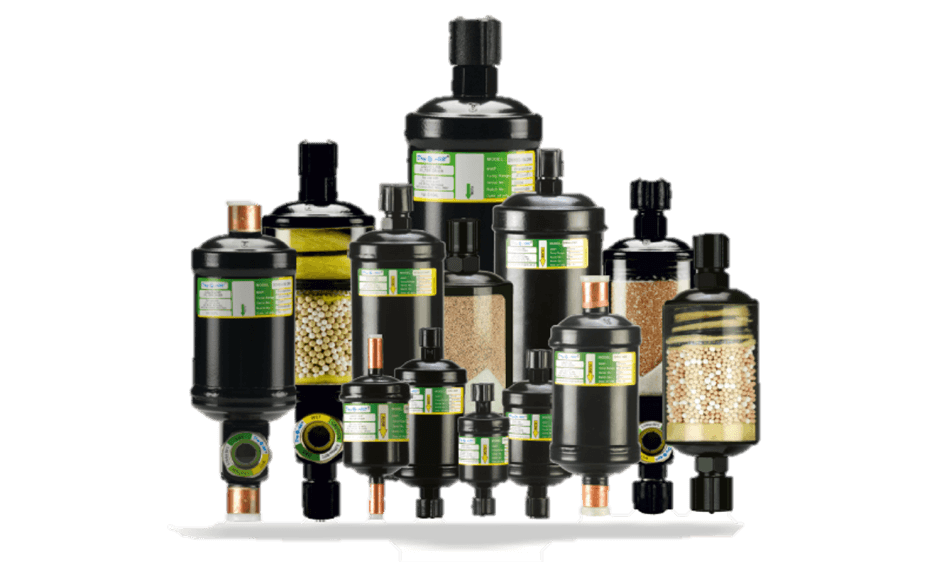
Figure 2. Widest Range of Filter Driers
The purpose of a filter drier in a refrigeration system is to eliminate undesirable impurities and keep the refrigerant clean. If these impurities are continued to accumulate to a critical level, the system’s lifespan will be at risk. Moisture, acids, copper oxides, metal particles, and wax-like substances are the most typical contaminants found in the system. These contaminants may flow with the refrigerant, obstruct the expansion valve and harm the performance of the system.
The main concern in the refrigeration system is moisture. It is trapped through the air due to improper lubricating oil handling and system evacuation. Having a hygroscopic nature, lubricating oils absorb moisture. This moisture could cause corrosion in metallic components and the formation of acids. Since moisture levels must be kept to a low level to prevent corrosion and acid formation. The refrigerant in the system at elevated temperatures reacts with a water molecule and produces hydrochloric and hydrofluoric acids. Also, the organic acid produced due to lubricant degradation is a significant additional source of acidity in refrigeration systems. So, to keep the system safe the filter drier has to perform the filtration and drying function.
Filtration:
As the name suggests, the ‘Filter Drier’ performs two functions: Filter + Drier. The Filtration part of the filter drier is to filter the debris, brazing chips, dust, rust, and sludges. All these contaminants can cause a decrease in efficiency and even result in the failure of the compressor.
In the filter drier, layers of fibrous media and a series of layers of glass wool are used to filter these impurities and act as a safeguard to the refrigeration system.
Moisture & Acids Removal:
Customization:
Now coming to the drying part. Molecular sieve and activated alumina are used in a Filter Drier to adsorb moisture and acids respectively. Molecular sieves are crystalline sodium alumino-silicates that adsorb moisture based on molecular size and polarity. The molecular sieves’ honeycomb structure allows the refrigerant to freely flow and adsorb water molecules. The activated alumina is used in Filter Drier to absorb the acids.
‘Dry All’ Filter drier:
- Bead Type Filter Driers
- Core Type Filter Drier
The two different types of filter dryers produced by “Dry All” are based on the desiccants’ structure that provide excellent moisture adsorption, acid removal and contaminant filtration.
‘Dry All’ has the widest range of Filter Driers like Liquid Line Filter Driers, Suction Line Filter Driers, Bi-Flow Types Filter Driers, Filter Drier with Sight Glass, Zoom Lock Type Filter Drier, and Suction Line Filter.
These Filter Driers act as insurance for your HVAC&R System.
Conclusion:
HVAC&R systems are complex machines, made of crucial components. The Filter Drier among these components is vital and takes care of all other components to function well by keeping the refrigerant clean. For this reason, a working professional in the HVAC&R industry needs to be well-versed in all things related to filter driers which include size, type, design, capacity etc.
Authored by:
Dry All
Manufacturer of "Full Range of HVAC&R Line Products"