Refrigerant Transitions or Leak Challenges — Dry All Remains Ready
Another refrigerant transition is already upon us. As the HVAC&R world pivots from high-GWP refrigerants like R-410A to lower-GWP alternatives such as A2Ls (like R-32 and R-454B), the industry buzz is undeniable. This shift, driven by the AIM Act and EPA regulations, has sparked a wave of innovation — on full display at this year’s AHR Expo in Orlando.
But here’s the kicker: even as we celebrate these next-gen refrigerants, the real conversation is quietly gaining momentum in the background.
What’s next after A2Ls? Are we preparing for a future where flammable refrigerants like R-290 (propane) become mainstream in comfort cooling? And, perhaps more critically, are we just chasing chemicals instead of solving the actual issue?
Europe Leads. Will the World Follow?
In Europe and the UK, propane-based systems — especially monobloc air-to-water heat pumps — are already in use. But these systems keep the refrigerant outside the home, reducing safety concerns. In the U.S., where ducted air-to-air systems dominate, using flammable refrigerants inside homes isn’t just a technical hurdle — it’s a regulatory mountain & similarly it applies to other countries where strict protocol regarding refrigerants need to be followed.
Experts like Scott Stone from Glencoe Strategies raised valid concerns at the AHR Expo: rushing another transition, especially to A3s like R-290, without the necessary updates in building codes and standards, could be chaotic and counterproductive.
States pushing for refrigerants with a GWP below 10 must consider more than just equipment readiness. Building codes, EPA’s SNAP approvals, and even contractor education need time to evolve. If these aren’t addressed proactively, the transition risks becoming unworkable.
Leak First. Chemistry Second.
One moment from the Expo really hit home — an audience member remarked: “It’s not a chemical problem. It’s a leak problem.” That drew laughter, but also nods of agreement. Because the hard truth is: refrigerants, no matter how ‘green,’ lose their eco-friendliness the moment they start leaking.
Scott Stone summed it up best: “If it doesn’t leak, it doesn’t matter what’s in there.”
So, Where Does That Leave Us?
This is where manufacturers, system designers, and policymakers must reframe the conversation. Instead of jumping from refrigerant to refrigerant, the focus must shift toward leak prevention, smarter system design, and real-world reliability.
And that’s where Dry All stands future-ready.
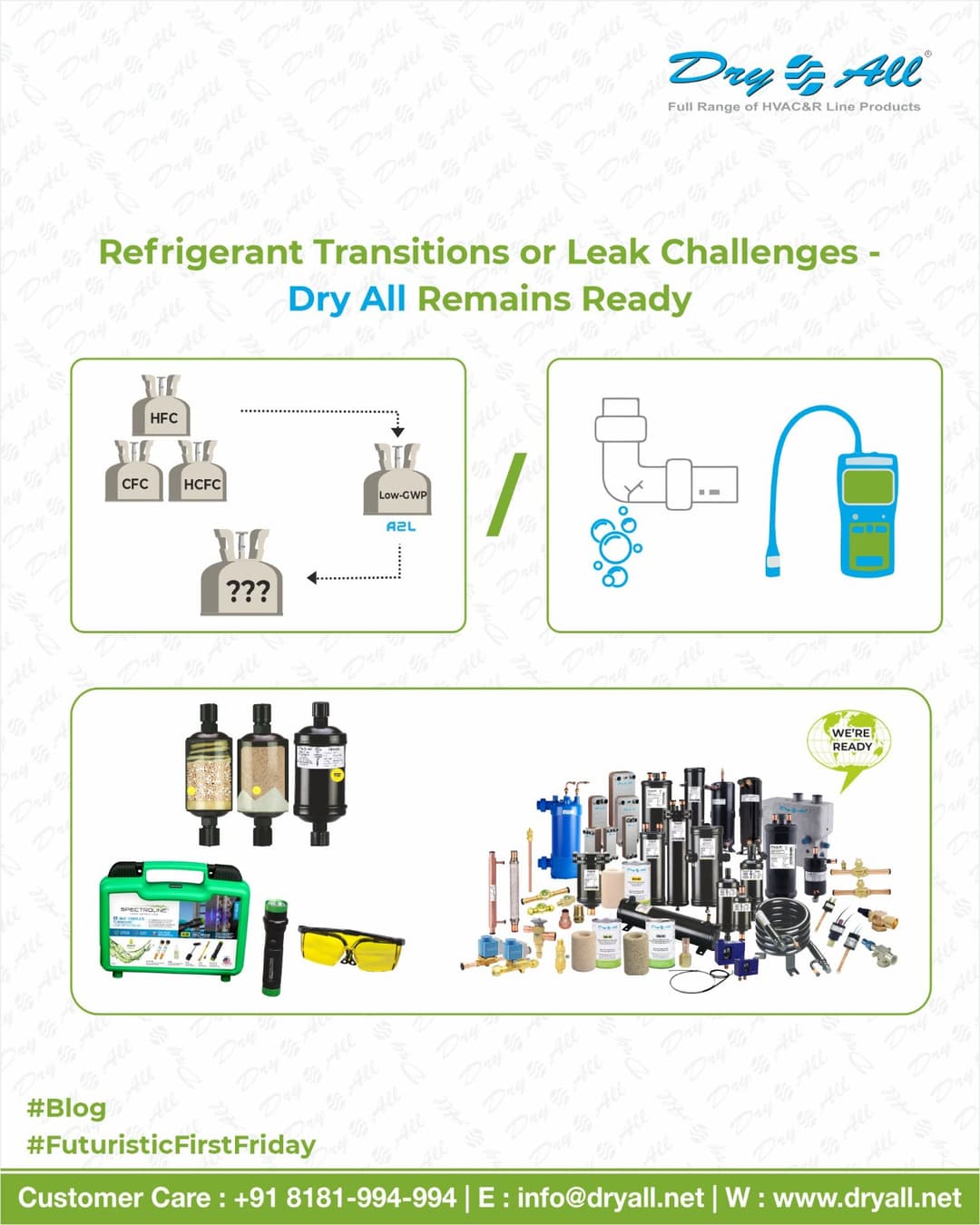
Strive to make a Leak-Conscious System & Dry All
At Dry All, we understand that preventing leaks starts with high-performance system design, rigorous component integrity, and field-ready diagnostic tools.
Take our TW Series Filter Drier with built-in leak detection technology. It doesn’t stop leaks from happening — and it doesn’t need to. Instead, it provides essential diagnostic value, helping technicians locate and confirm leaks more quickly after a problem has occurred. In the race against downtime, that kind of service efficiency becomes mission-critical.
Rather than being out of place in a leak-free system, the TW Series plays a vital role in helping that system stay leak-aware and field-resilient.
Pair that with our advanced Dry All Filter Driers, Accumulators, Oil Separators, Receivers, Heat Exchangers and you have a comprehensive lineup that’s not just compatible with next-gen refrigerants — but built to uphold system reliability no matter what refrigerant the future brings.
Conclusion
Refrigerant transitions will likely continue — it’s the nature of an industry tied to environmental progress. But if we stop chasing chemicals and start addressing how refrigerants are managed inside the system, we can finally break the cycle.
This #FuturisticFirstFriday, we invite the HVAC&R world to think beyond the cylinder. Let’s build systems where diagnostics like the Filter Driers with TW & ‘Full Range of HVAC&R Line Products’ from Dry All aren’t just helpful — they’re indispensable.
Because in the end, sustainability doesn’t come from the refrigerant itself — it comes from keeping it where it belongs.
Authored by:
Dry All
Manufacturer of "Full Range of HVAC&R Line Products"