Know Your Copper Connections: Understanding ODF (Solder) & ODM (Zoom Lock) Fitment
When it comes to HVAC systems and refrigeration applications, copper tubing connections play a critical role in ensuring the efficiency and longevity of the system. Two of the most commonly used connections are the ODF (Outer Diameter Female) and ODM (Outer Diameter Male) fittings. Understanding these connections, their characteristics, and the right application methods can significantly impact system performance.
In this blog, we’ll break down ODF and ODM connections, showcasing how they fit into a typical HVAC&R system and the unique features of each.
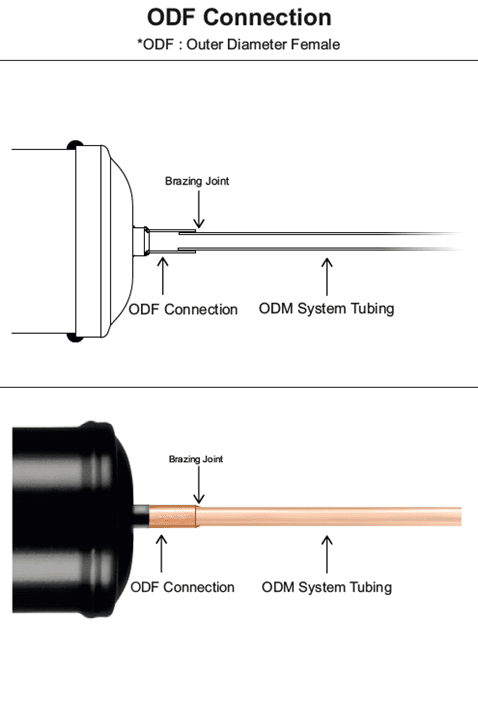
1. ODF (Solder) Connection (Outer Diameter Female)
The ODF connection, or Outer Diameter Female, is a type of fitting where the female socket receives the system tubing. These fittings are designed to be used with brazing joints that securely connect the copper tubing to the system.
Key Features:
- Brazing Joint: ODF connections use heat to melt the filler material, creating a strong, leak-proof bond.
- Secure and Per manent: Once brazed, the connection becomes a permanent part of the system, making it ideal for long-term applications.
- System Tubing: The system tubing (ODM) is inserted into the ODF connection before brazing, ensuring a solid fit.
Typical Application: ODF connections are commonly found inhigh-pressure and critical refrigeration systems, where permanent and reliable connections are essential.
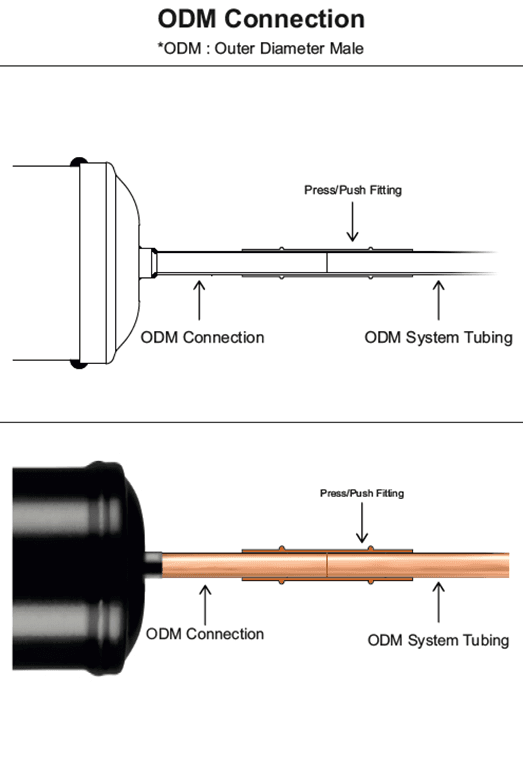
2. ODM (Zoom Lock) Connection (Outer Diameter Male)
The ODM, or Outer Diameter Male, connection is a male fitting that is inserted into a corresponding system tube. Unlike the ODF, the ODM typically uses press/push fittings instead of brazing, making it a more flexible and removable connection.
Key Features:
- Press/Push Fitting: ODM connections often utilize a press/push fitting mechanism that allows for easy assembly and disassembly. This makes it a convenient option for systems that may need future modifications or maintenance.
- Quick Installation: The press fitting method simplifies installation compared to brazing, as no heat is required.
- Flame-Free Solution: One of the standout benefits of ODM connections is that they can be used in environments where open flames (such as those used for brazing) are prohibited. This makes them ideal for settings with flammable materials or fire-sensitive areas.
- Flexibility: Since ODM connections are not permanent, they offer flexibility for adjustments and replacements.
Typical Application: ODM connections are frequently used in systems where ease of maintenance, quick installation, and flame-free operation are priorities, such as in sensitive areas like hospitals, clean rooms, or other fire-restricted environments.
ODF vs. ODM: Choosing the Right Fitment
The primary difference between ODF and ODM connections lies in their fitment and connection process:
- ODF (Outer Diameter Female) connections are ideal for applications requiring permanent, secure connections. Brazing provides a solid, leak-free joint suitable for systems that will remain untouched for long periods.
- ODM (Outer Diameter Male) The system connections, on the other hand, are better suited for situations requiring flexibility and flame-free solutions. The press/push fitting option makes them easier to install and remove, when necessary, particularly in environments where brazing (with an open flame) cannot be used.
| Feature | ODF (Outer Diameter Female) | ODM(Outer Diameter Male) |
|---|---|---|
| Connection Method | Brazing | Press/Push Fitting |
| Installation Speed | Requires time for Brazing | Quick and Simple |
| Durability | Permanent and Leak-Proof | Flexible and removable |
| Use Case | High Pressure systems, critical joints | Modular ir frequently updated systems |
When to Use Each Connection Type:
Use ODF connections when:
- You need a permanent, tamper-resistant solution.
- The system operates under high pressure.
- Leak-proof joints are critical to operation.
Use ODM connections when:
- You need flexibility for future changes or maintenance.
- Flames are not allowed, such as in fire-sensitive areas.
- You prefer a faster installation process.
- The system is modular or will undergo frequent updates.
Conclusion
Understanding the difference between ODF and ODM connections helps ensure optimal system performance. While ODF fittings provide secure, permanent solutions, ODM connections offer flexibility and convenience for systems requiring frequent updates or in flame-restricted areas.
Whether you’re designing a new system or maintaining an existing one, choosing the right fitment type is crucial. By leveraging the benefits of each connection, you can achieve both reliability and efficiency in your HVAC or refrigeration system. For more guidance on selecting the right connections for your system, reach out to us at Dry All—your trusted partner in innovative HVAC&R solutions.
Authored by:
Dry All
Manufacturer of "Full Range of HVAC&R Line Products"